

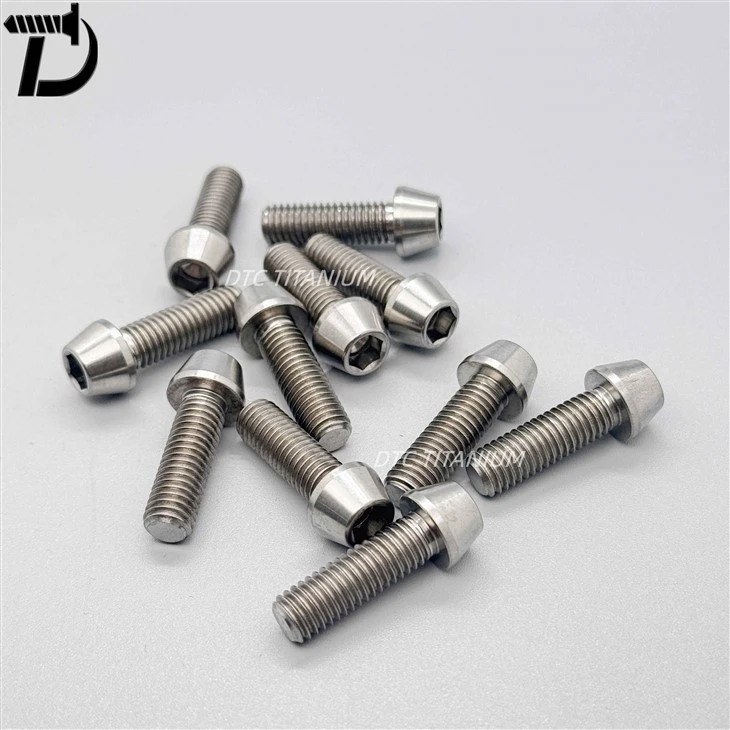


This bolt deserves your serious attention
The titanium front axle pinch bolt is probably one of the most inconspicuous parts on your bike. Hidden at the bottom of the shock absorber, it doesn't contribute to power transmission or directly affect braking feel. Most riders don't even realize it's there-until they can't remove the front wheel, or it snaps off inside the hole with a "snap" when tightened.
Our approach to designing the titanium front axle pinch bolt is simple: to ensure this part remains reliable with every installation and removal.
What Does It Actually Do?
The titanium front axle pinch bolt is mounted at the bottom of the shock absorber and clamps the front axle from the side. The normal operation of the wheel relies on the axial tightening of the front axle nut, while the pinch bolt prevents the front axle from shifting axially or rotating due to vibrations. If the clamping force is insufficient, the front axle may experience slight displacement while driving, manifesting as a vague sensation in the front wheels during braking. In severe cases, micro-motion wear can occur between the front axle threads and the shock absorber bore, causing the shock absorber to seize up or even be damaged during disassembly or installation.
Simply put: the front axle nut provides "axial locking," while the clamping bolt prevents "rotation and axial movement."
Several Real Shortcomings of Original front axle pinch bolt
Thin heads result in insufficient tool engagement. To control costs and weight, many brands design their original equipment clamping bolts with relatively thin heads. When torque is applied with a standard hex wrench, the contact area is insufficient, making the bolt prone to slipping and deformation.
Excessive pre-applied threadlocker. Some manufacturers apply a large amount of threadlocker at the factory, making initial disassembly extremely difficult-requiring heat to loosen them. Some Ducati owners have described the red Loctite on the OEM bolts as "outrageously excessive."
Stress-induced stretching is not visible. The recommended torque for clamping bolts is typically only 15–25 Nm, but if a previous technician over-tightened them with a high-torque wrench, the bolts can become stretched. Stretched bolts appear normal, but continued use may cause them to snap during the next disassembly. Owners on the Aprilia forum have reported that the four clamping bolts they removed were "all visibly stretched."
Rust and Seizure Due to Galvanized Coating Wear. In humid and rainy regions, the threaded sections of the stock steel pinch bolts rust and seize in the aluminum alloy threaded holes; it's not uncommon to spend half an hour removing a single bolt.
Why Switch to Titanium Alloy?

Although the weight reduction is minimal, the location is critical
Titanium alloy (6Al-4V, or Grade 5) is about 40% lighter than the original steel bolts. The weight difference for a set of four M8 titanium front axle pinch bolt is approximately 30–50 grams. Taken alone, this figure may not seem impressive, but these bolts constitute unsprung mass-components located below the shock absorber that move with the wheel.
The perceived benefit of reducing unsprung mass is roughly several times greater than that of reducing sprung mass. For the front wheel, lighter unsprung mass means the shock absorber can absorb road bumps more quickly, improving front-wheel traction. This is especially noticeable on consecutive turns and rough roads, where the sensation of the front wheel "losing contact with the ground" is significantly reduced.

Corrosion Resistance-The Most Practical Benefit
OEM front axle pinch bolts are typically made of galvanized steel. The galvanized coating is fine in dry conditions, but the front axle area is constantly exposed to road water, chain oil splashes, and car wash water. The bolt head comes into contact with the aluminum alloy threaded hole in the shock absorber; once the galvanized coating is damaged, galvanic corrosion occurs between the steel and aluminum. In damp conditions, this type of corrosion progresses much faster than when the same metal comes into contact with itself.
Titanium alloy naturally forms a dense oxide layer on its surface at room temperature, eliminating the need for plating. It will not undergo galvanic corrosion in the same environment-provided that an anti-seize compound is applied during installation.

Durability Under Repeated Assembly and Disassembly
On racetracks and off-road, the front wheel is removed and reinstalled extremely frequently. A common issue with the stock steel front axle pinch bolts is that the head walls are relatively thin; after repeated application of force with an Allen wrench or T-wrench, the inner hole of the head is prone to deformation or even rounding. We've seen more than one Ducati owner on forums report that the stock pinch bolts have "heads that are absurdly thin and deform with even slight force."
The titanium front axle pinch bolts undergo forging and rolled-thread processing, ensuring precise head dimensions and a tight fit with tools, allowing them to reliably transmit torque even after long-term use.
FAQ

01.Why is an anti-seize compound needed between titanium alloy bolts and aluminum alloy bolt holes?
02.Are M8 and M10 pinch bolts interchangeable?
03.How often should pinch bolts be inspected or replaced?
04.What are the benefits of pre-drilled bolts?
05.Do titanium pinch bolts need to be rechecked with a torque wrench after installation?
Hot Tags: titanium front axle pinch bolt, China titanium front axle pinch bolt manufacturers, suppliers, factory, pinch bolts, titanium hardware for motorcycle, Titanium Pistons for Motorcycles, Titanium Swingarm Pinch Bolts


